Industrial decarbonization is usually framed as an environmental necessity, but it is also becoming an enormous economic transformation. As manufacturers, energy companies and governments pursue lower emissions, billions will be spent developing technology, upgrading infrastructure and changing the way essential materials are produced.
That creates an interesting question from a business and wealth perspective: who stands to benefit? The answer stretches far beyond renewable energy companies. Engineers, technology developers, manufacturers, investors, and even workers with specialized skills could find opportunities emerging from the transition.
Carbon Capture Creates a New Technology Market
Heavy industries such as cement, steel and refining are particularly difficult to decarbonize. Some industrial processes produce carbon dioxide directly, meaning switching to renewable electricity cannot eliminate every emission.
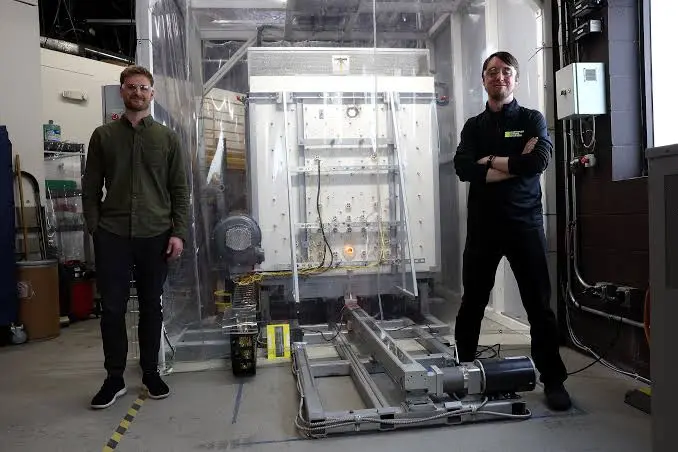
Carbon capture is one technology being developed to tackle this problem. UK-headquartered Carbon Clean focuses on carbon capture solutions for hard-to-abate industries, with technologies designed to capture CO2 directly from industrial facilities. Its CycloneCC system uses a modular, prefabricated approach intended to reduce the space and costs associated with conventional carbon capture plants.
Carbon Clean says CycloneCC can reduce the overall unit footprint by up to 50% and total installed costs by up to 50% compared with conventional systems. If technologies like these reach widespread commercial deployment, an increasingly significant market could develop around manufacturing, installation and maintenance.
Engineering Skills Could Become More Valuable
New industries do not grow through technology alone. They also require people capable of designing, manufacturing, installing and operating equipment. Industrial decarbonization could increase demand for mechanical and chemical engineers, project managers, construction specialists and technicians.
Existing expertise from sectors such as oil and gas may also prove valuable because large-scale carbon capture projects require many familiar industrial skills. This creates opportunities not only for multinational corporations but for specialist suppliers and contractors throughout the supply chain.
Investors Are Watching the Transition
Decarbonization also presents opportunities for investors, although emerging climate technologies carry considerable risk. Companies that successfully reduce the cost of cutting industrial emissions could potentially benefit as governments introduce tighter emissions standards and businesses pursue their own climate targets. Carbon Clean says its technologies have accumulated more than 3.2 million operational hours across industrial applications, illustrating how carbon capture is moving beyond purely experimental projects.
Investors will still need to distinguish between promising technology and commercially sustainable businesses. A growing market does not guarantee that every company operating within it will succeed.
Established Industries Could Benefit Too
Perhaps surprisingly, some of the biggest beneficiaries could be existing industrial businesses. A cement or steel producer that can lower emissions without completely rebuilding its facilities may protect its competitiveness as carbon regulations evolve.
Companies that decarbonize earlier could also be better positioned to supply customers seeking lower-carbon materials. The financial story surrounding decarbonization is consequently much broader than the growth of green start-ups.
A New Industrial Economy
The transition will create winners and losers, as major technological shifts always do. Businesses offering scalable solutions, investors identifying viable technologies, and workers developing relevant skills could all benefit. Ultimately, the race to decarbonize industry is not only about reducing emissions. It is also creating new markets, redirecting investment and changing where valuable expertise lies.
For anyone interested in how industries, careers and fortunes are built, that makes the low-carbon transition an economic story worth watching.