
Key Takeaway
- Stone, wood, and metal require material-specific cleaning and restoration methods.
- Scratches, stains, dullness, corrosion, and moisture marks can indicate developing damage.
- Fast action after a leak or spill can limit disruption and reduce material loss.
- Inspection records help teams prioritize repairs before replacement becomes necessary.
- A written surface-care plan should reflect traffic, moisture exposure, approved products, and building use.
From office lobbies in Charlotte to healthcare facilities, schools, retail centers, and warehouses across North Carolina, architectural surfaces work hard every day. Floors, doors, wall panels, counters, railings, elevator surrounds, and exterior accents all influence how a property looks, feels, and functions. Thoughtful care helps facility teams preserve these assets instead of reacting only after visible damage has spread. A practical maintenance strategy combines routine cleaning, early inspections, prompt moisture control, and appropriate repair methods for each material. For property managers considering building maintenance in North Carolina, the essential starting point is recognizing that stone, wood, and metal do not respond to traffic, water, chemicals, or abrasion in the same way.
Why Surface Care Matters in Commercial Buildings
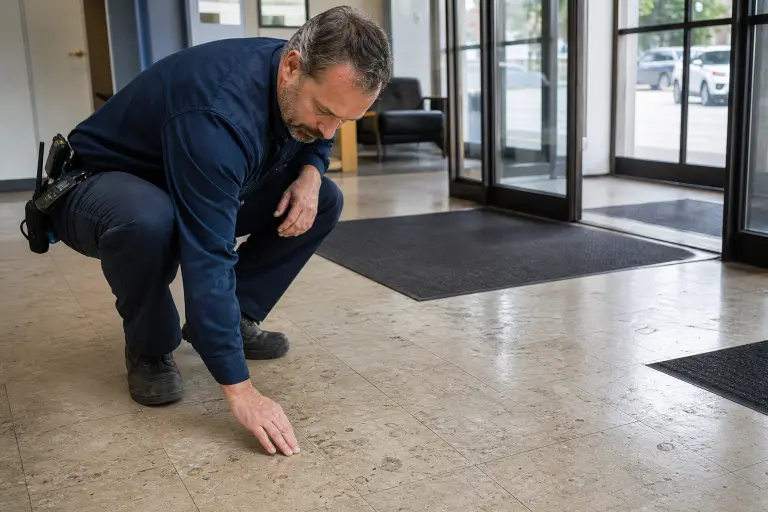
Surface care is part of responsible facility planning. A dull lobby floor near an entrance, for example, may be receiving more grit, water, and foot traffic than the rest of the space. If the condition is addressed early through improved matting, frequent soil removal, and suitable finish care, the building may avoid a more involved repair later. Well-maintained surfaces can also support safer daily operations. Loose flooring, sharply damaged metal edges, slippery wet areas, and unstable wall materials should be addressed promptly. Facility teams should treat surface conditions as an operational issue, not simply an appearance concern.
The Main Causes of Surface Damage
Commercial materials commonly deteriorate due to repeated foot traffic, rolling carts, moving furniture, construction activity, and tracked-in dirt or salt. Water exposure is another major concern. Leaks, flooding, condensation, high humidity, and poorly dried cleaning processes can affect finishes, adhesives, joints, and the material underneath. Sunlight, temperature fluctuations, unsuitable cleaners, abrasive pads, and inconsistent maintenance can contribute to wear. North Carolina properties should pay particular attention to entrances, loading areas, restrooms, break rooms, mechanical rooms, and other locations where moisture or debris may be more likely to reach finished surfaces.
How to Care for Stone Surfaces
Marble, granite, limestone, terrazzo, and other stone surfaces vary in porosity, hardness, and chemical sensitivity. A cleaning approach that is appropriate for one material may dull, stain, or etch another. Signs that deserve attention include dull patches, etched areas, chips, cracks, stains, loose sections, and worn grout or joint material.
- Remove dry grit frequently, especially around entrances and walkways.
- Use mats where they can reduce tracked-in soil and moisture.
- Use cleaning products approved for the specific stone and test them in a hidden area first.
- Avoid acidic products on acid-sensitive stone, including many marble and limestone surfaces.
- Consider professional honing, polishing, sealing, or spot repair when routine cleaning no longer improves the finish.
How to Care for Wood Floors and Architectural Wood
Wood floors, doors, trim, wall panels, counters, and built-in fixtures can be affected by excessive moisture, abrasion, and finish wear. Water may contribute to swelling, staining, cupping, separation, or finish failure, depending on the product and construction. Routine care should focus on dry dust removal, prompt spill cleanup, controlled cleaning moisture, and protective pads beneath furniture. Minor marks may respond to touch-up work or finish renewal. Deep scratches, widespread wear, raised edges, or water-related distortion may call for targeted repair, sanding, refinishing, or replacement of isolated components. Wood should not be saturated during normal cleaning, and movable equipment should use soft, non-marking wheels when possible.
How to Care for Architectural and Ornamental Metal
Stainless steel, bronze, aluminum, brass, coated metal, and other architectural metals appear throughout commercial properties. Elevator doors, handrails, hardware, wall panels, decorative trim, and exterior accents can show fingerprints, scratches, oxidation, discoloration, corrosion, or worn coatings. Cleaning should follow the material and finish requirements. On brushed metal, work with the grain rather than across it. Remove fingerprints, salt residue, and chemical residue before they become harder to correct. Abrasive pads and unapproved chemicals can damage protective coatings or alter the appearance of finished metal.
What to Do After Water Intrusion
Water intrusion requires an organized response because moisture can contribute to swelling, corrosion, rot, and microbial growth. The effects of water damage may also extend beyond the visibly wet area to include flooring edges, cabinets, subfloors, and wall cavities.
- Protect people first and restrict access to unsafe spaces.
- Stop or control the water source when it is safe to do so.
- Document affected rooms, materials, equipment, and visible conditions.
- Remove standing water and begin appropriate drying as quickly as possible.
- Check adjacent and concealed areas for moisture migration.
- Bring in qualified specialists when electrical systems, sewage, structural components, or widespread moisture are involved.
When Cleaning Is Enough and When Restoration Is Needed
- Light soil or fingerprints: Begin with routine cleaning using a material-safe product.
- Minor dullness or finish wear: Consider deep cleaning, polishing, honing, or finish renewal.
- Deep scratches, staining, or corrosion: Seek specialized repair or refinishing.
- Swelling, loose materials, cracks, or instability: Schedule an inspection before attempting cosmetic cleaning.
- Water-related damage: Start with moisture assessment and drying, then determine whether targeted restoration is feasible.
A Simple Inspection and Care Schedule
- Daily: Look for spills, trip hazards, fresh stains, and heavy soil.
- Weekly: Review entrances, corridors, elevators, restrooms, and high-touch metal surfaces.
- Monthly: Check for scratches, finish wear, grout concerns, moisture marks, damaged edges, and coating changes.
- Quarterly: Inspect storage rooms, service areas, exterior entry points, and less-visible surfaces.
- Annually: Compare condition photos, review repair records, and update the care plan and budget.
Planning, Budgeting, and Hiring Restoration Specialists
A useful plan identifies the material, location, approved products, traffic level, recurring concerns, inspection date, and responsible team member. It should also distinguish routine cleaning costs from anticipated restoration work. Recent restoration industry discussion has continued to highlight water-related work and operating pressures, making documented planning especially useful for facility budget requests, as reflected in the 2026 restoration benchmarking survey. Before hiring a specialist, ask whether the team has experience with the specific material, will inspect before recommending treatment, can test a small area first, and will explain access requirements, safety controls, documentation, and post-restoration maintenance. Comparing the impacts of repair, replacement, downtime, disposal, and installation can help decision-makers choose the most appropriate option.
Frequently Asked Questions
How often should commercial surfaces be inspected?
High-traffic areas may need daily or weekly checks. Less-used areas may be reviewed monthly or quarterly. Increase inspection frequency after leaks, renovations, severe weather, or recurring maintenance issues.
Can one cleaner be used on every surface?
No. Products and tools should match the material and finish. Testing in a discreet area helps reduce the risk of visible damage.
When should a facility stop DIY cleaning?
Seek specialist help when damage involves hidden moisture, electrical hazards, sewage, structural materials, widespread corrosion, unstable surfaces, or repairs beyond routine cleaning.
Conclusion
Commercial surfaces can last longer when proper care begins before minor wear, staining, moisture damage, or surface deterioration becomes more difficult to address. For North Carolina facilities, a consistent inspection routine can help identify developing problems early and guide appropriate maintenance decisions. Material-safe cleaning methods are also important because stone, wood, metal, and other commercial surfaces can have different care requirements.
Quick response to leaks, spills, standing water, and excess moisture can help limit avoidable damage, while accurate maintenance records make it easier to track recurring issues and plan future service. When cleaning, inspection, and restoration are treated as connected parts of facility maintenance, businesses can better protect their surfaces, manage repair needs, and reduce unnecessary disruption to daily operations.
Also Read
