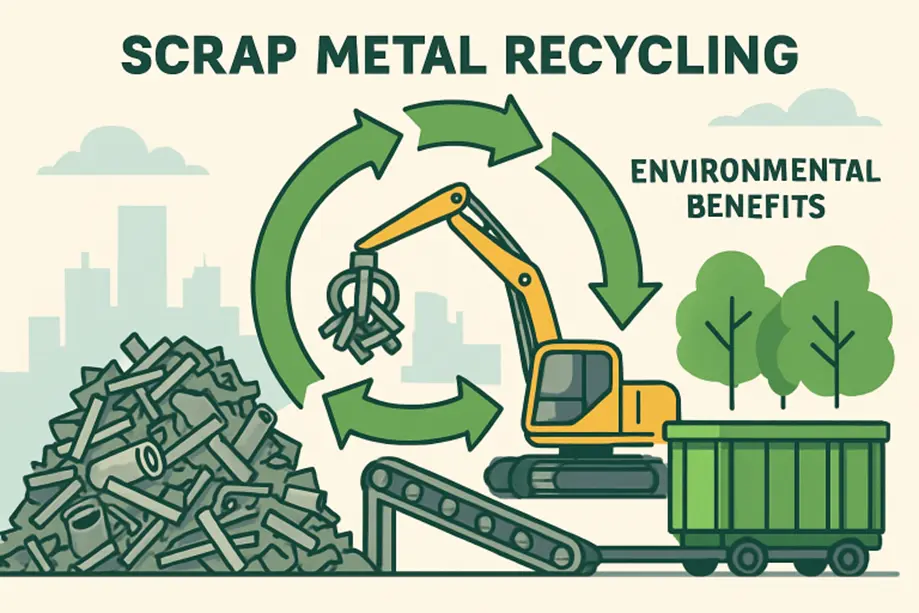
Scrap metal recycling stands at the crossroads of sustainability and industrial progress, offering a solution that addresses both environmental and economic challenges. It’s a powerful process that not only limits landfill waste but also curbs the depletion of nonrenewable resources. For those interested in optimizing their recycling efforts, learning more about how to metal recycle household and industrial items efficiently can make a big difference in reducing your environmental footprint.
Recycling scrap metal is rapidly becoming a cornerstone of responsible industry, as it drastically lowers energy use and greenhouse gas emissions compared to mining and refining new metal. It’s no surprise that as more organizations and individuals seek sustainability, scrap metal is taking center stage in the global effort toward a circular economy—one where materials are continually reused rather than discarded.
The transition to increased recycling and reduced reliance on virgin resources is essential as urbanization accelerates and global metal demand surges. Efforts by governments, businesses, and innovators are converging to make recycling more accessible and effective, putting the planet and profits on the same team. To gain insight into recycling best practices and stay up-to-date on policy news, explore resources such as Recycling Today’s coverage of metal recycling.
This transformation in recycling is not just industrial or regulatory; it’s fundamentally about people making more conscious choices. The role of households, communities, and organizations is crucial in creating a real and scalable impact. As more people take active steps to participate in recycling networks, the momentum for a greener future continues to grow.
Environmental Benefits of Scrap Metal Recycling
By recycling metals, industries can significantly reduce pollution and waste creation. Producing steel from recycled sources, for example, slashes carbon dioxide emissions by nearly 1.5 tons per ton of steel compared to conventional methods. This process can save up to 74% of the energy required compared to making steel from raw ore, thereby reducing fossil fuel usage and the overall carbon footprint of manufacturing.
Recycling also conserves natural landscapes. Mining for new metals often results in deforestation, soil degradation, and ecosystem disruption. Redirecting scrap for reuse minimizes these destructive outcomes, helping to preserve biodiversity and maintain healthier, more resilient natural resources for future generations.
Technological Advancements in Metal Recycling
Modern recycling facilities are harnessing smart technologies to streamline and improve the recycling process. Artificial intelligence and robotics are now widely used to sort and process scrap metal, increasing both speed and accuracy. For example, AI-driven tools can rapidly evaluate the value of scrap, schedule pickups, and manage a range of customer interactions with minimal human input. Meanwhile, advanced systems such as Laser-Induced Breakdown Spectroscopy (LIBS) and X-ray Fluorescence (XRF) enable recyclers to separate materials with a high level of precision, thereby enhancing the quality and utility of recycled metals.
These technological leaps not only lower operational costs for recycling businesses but also improve the quality of the end product, boosting market acceptance and expanding the scope for sustainable manufacturing across various industries. According to BBC Future’s insights on recycling innovation, automation and smart sensors are rapidly transforming the sector and paving the way for even greater efficiencies.
Economic Impact of the Scrap Metal Industry
The influence of the scrap metal sector extends far beyond environmental benefits—it is a vital contributor to the global economy. In the United States alone, the industry was valued at over $90 billion as of 2012, supporting hundreds of thousands of jobs and generating billions in government revenues. These numbers reflect only a portion of its impact, as efficient recycling drives growth in adjacent industries, offers alternative raw materials, and fuels innovation in manufacturing, infrastructure, and beyond.
Reinvesting in recycling infrastructure and boosting recovery rates can create even more jobs and economic opportunities, fostering regional development and resilience within the supply chain.
Challenges in the Scrap Metal Recycling Process
While the benefits are clear, the industry faces key hurdles. Material impurities, such as residual iron in recycled aluminum, can compromise the properties of final products, requiring additional purification steps. New processes, such as direct strip casting, which utilize rapid solidification, are being developed to address these quality issues and enhance tolerance to impurities.
Another challenge is the supply-demand imbalance for high-quality scrap. Global demand for recycled metals is rising faster than the available supply, putting pressure on recyclers to innovate and on policymakers to incentivize greater collection and sorting.
Role of Policy and Regulation in Metal Recycling
Sound policy frameworks are central to ensuring the industry’s sustainability. For example, the European Union’s proposed duties on aluminum scrap exports aim to secure supply for the domestic sector and support its climate objectives. In the U.S., there are movements to develop more unified statewide regulations that create consistency across recycling operations while fostering environmental progress.
Government directives play a crucial role in promoting investments in technology, enhancing standards for waste management, screening for illicit recycling, and encouraging public engagement.
Future Trends in Scrap Metal Recycling
The future of scrap metal recycling is shaped by widespread adoption of circular economy principles, in which the “take-make-dispose” model is rapidly giving way to a system built on reuse. Technological advances—from artificial intelligence to advanced sensor automation—are expected to revolutionize scrapyards further, optimizing both yield and purity while meeting the surging demand for sustainable materials.
Global decarbonization efforts will continue to elevate the importance of recycled metals, prompting manufacturers and end-users to adopt more circular approaches to resource management.
How Individuals Can Contribute to Metal Recycling
Everyone has a part to play in building a more sustainable materials economy. By separating and properly disposing of metal waste, supporting companies that use recycled content, and participating in local recycling initiatives, individuals can help drive demand for recycled materials and reduce landfill contributions. Staying informed about community guidelines and recycling programs is key to maximizing each person’s impact.
Conclusion
Scrap metal recycling is far more than a business—it’s a vital practice at the heart of sustainable development. With new technologies, thoughtful policies, and growing public engagement, metal recycling will continue to shape a more resource-efficient and ecologically responsible global future.
Also Read-The Tech Powering Rare Carat’s Diamond Matchmaking