
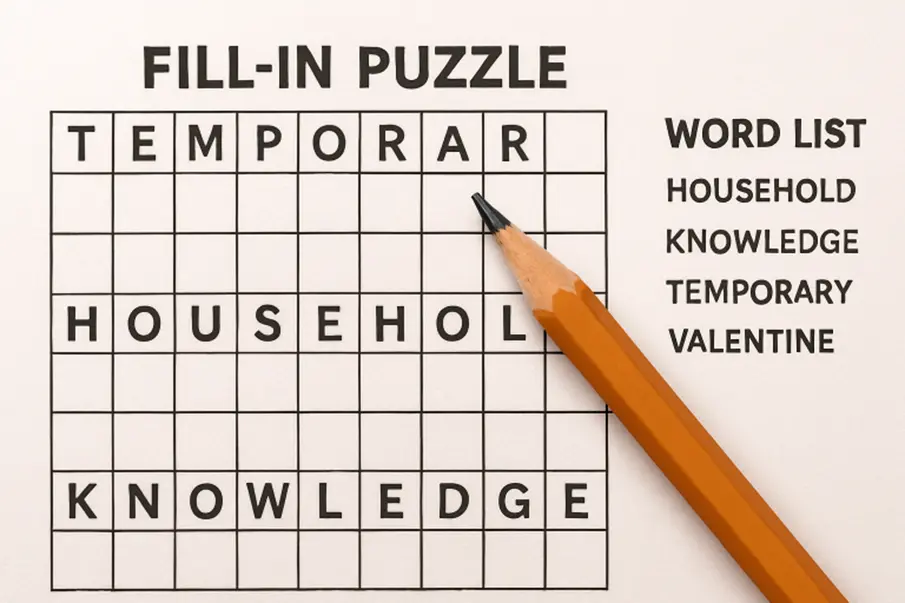
Fill-in puzzles are a compelling way to test your word skills, requiring players to fill a grid with a list of preselected words. While seemingly straightforward, these puzzles can present a unique challenge by demanding logical placement without the assistance of clues. For puzzle enthusiasts seeking to enhance their accuracy and speed, employing the right techniques is essential. If you’re eager to boost your performance and tackle tougher grids, click here to explore further resources and puzzle varieties.
Approaching fill-in puzzles methodically sets you up for success, as each correctly placed word opens possibilities for others. Even seasoned solvers find that small adjustments in strategy make a big difference. Whether you’re seeking an enjoyable pastime or looking to compete in timed tournaments, the following tips will help you maximize both efficiency and enjoyment during your puzzle-solving sessions.
The fundamentals of solving fill-in puzzles remain consistent no matter your experience level. Focusing on word patterns and utilizing unique letter combinations are just two ways to minimize mistakes and quickly gain momentum. As you apply these techniques, you’ll find that each puzzle becomes both more approachable and more rewarding.
By consistently practicing and adopting a few key strategies, your ability to complete fill-ins will improve steadily. From maintaining a well-organized workspace to tackling challenging sessions under time constraints, these tips will form the foundation of your problem-solving toolkit.
Start with the Longest Words
Begin every fill-in puzzle by searching for the longest words in your provided list. These have limited placement options on the grid, making them ideal as anchors for your solving process. Placing them first provides a clear structure, as their intersecting letters immediately suggest potential locations for shorter words. By establishing this essential framework, you’ll reduce the trial-and-error effort needed for subsequent placements.
Identify Unique Letter Combinations
Words with rare or unusual letter combinations, such as those containing ‘Q’, ‘Z’, or long double letters, are easier to identify and place. With so few locations where these combinations fit, spotting and positioning these early can rapidly clarify the puzzle’s structure. This method is especially helpful when faced with similar word lengths and patterns elsewhere on the grid.
Utilize Word Patterns
Stay alert to word segments that repeat across your list, such as frequent prefixes or suffixes like ‘pre-’ or ‘-tion’. Recognizing these recurring segments helps predict how words interact on the grid. If a vertical slot has three empty spaces that begin the puzzle, and you know a word begins ‘pre-’, you can confidently try likely contenders. Such pattern recognition speeds up placement and limits the need for erasing or backtracking.
Cross-Reference Intersecting Words
Every time you position a word, look for how its letters interact with intersecting horizontal and vertical slots. Cross-referencing confirms your choices, reinforcing correct moves and helping you quickly notice if something is out of place. This approach, adapted from crossword solving, reduces errors and helps you avoid needing to overhaul large areas of the grid later.
Sort Words by Length
Before you start dropping words onto the puzzle, organize your list from longest to shortest. This arrangement aligns with the initial tip and streamlines each step. Focusing on longer words first naturally narrows down where smaller entries can fit, reducing confusion and minimizing wasted effort as you progress through the puzzle.
Take Breaks to Refresh Your Mind
If you reach a point where you feel stuck, don’t hesitate to take a brief pause. Even a few minutes away can refresh your perspective, making once-overlooked placements suddenly obvious. Short breaks enhance your focus and eliminate frustration, a technique recommended by puzzle experts and neuroscientists alike.
Practice Regularly
Solving fill-in puzzles is a skill that improves dramatically with routine practice. Consistent engagement enables you to internalize common word placements, refine your strategies, and recognize patterns more quickly. Even setting aside a few minutes daily for a quick puzzle can build your solving speed and confidence over time.
Work in a Well-Lit Environment
Lighting matters more than you might think. Bright, even lighting reduces eye strain and helps you spot subtle differences between similarly shaped letters. A clear, unobstructed workspace also keeps you alert, sharpening your ability to catch and correct mistakes as soon as they arise.
Stay Organized
A neat workspace supports a clear mind. Keep your puzzle materials, pens, and pencils organized and your word list easily accessible. Minimizing clutter means no distractions or wasted moments searching for misplaced items, resulting in a more streamlined and enjoyable experience.
Challenge Yourself with Timed Sessions
Once you feel comfortable with your speed and accuracy, add the challenge of a timer. Time-tracking not only motivates you to improve but also makes each session more exciting and rewarding. Compare your scores over time to see your progress, and use your results to fine-tune strategies that work best for you.
Enhancing your fill-in puzzle-solving skills is a blend of logical thinking, attentiveness, and practice. By incorporating the strategies above, you’ll find that each puzzle is more engaging, less stressful, and more satisfying to complete. Remember, each small improvement builds on the last, opening up even greater possibilities in your puzzling journey.
